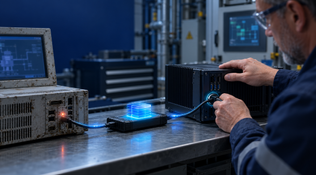
For oil and gas operators, operational technology (OT) is a lifeline, sometimes literally. OT systems are essential to maintaining not just reliable and efficient operations but also safe environments for workers.
In upstream production sites, offshore platforms, pipelines, terminals and refineries, critical processes depend on a complex network of OT assets that organizations use to control and optimize operations.
Cybersecurity programs for OT often focus heavily on prevention. Of course, preventing attacks is important, but oil and gas operators have to do more. You need to be prepared to answer a critical question: How quickly can you restore critical systems when an incident occurs?
Even the most effective security controls cannot prevent every cyberattack, hardware failure or operational disruption. When an incident impacts OT systems, prolonged downtime can affect production, delay shipments and create environmental exposure. It can also make the work environment more dangerous. Recovery readiness, then, is a core component of operational resilience.

Recovery is uniquely challenging in oil and gas environments
Recovering OT systems in oil and gas operations is often more complex than restoring traditional IT systems:
- Operations frequently span remote production facilities, offshore platforms, compressor stations and pipeline infrastructure with limited connectivity. Some sites operate on highly segmented networks or in air-gapped environments designed to reduce cyber risk.
- Many facilities also depend on legacy OT infrastructure that has remained in service for years or even decades. Replacing or rebuilding those systems can be difficult because operators have to carefully plan upgrades to avoid disrupting production.
- Unlike office environments, OT systems often support continuous industrial processes that cannot tolerate unexpected changes. Recovery procedures need to align with operational requirements and safety processes.
- In many cases, dedicated IT personnel are not available at every location. OT engineers, field technicians and operations personnel are often responsible for executing recovery procedures during an outage.
Energy production depends on critical OT assets
Oil and gas organizations often focus on control systems when evaluating resilience. However, recovery readiness depends on protecting a broader ecosystem of supporting OT assets, including:
- SCADA servers and clients
- HMI workstations
- DCS operator stations
- Engineering workstations
- Historians
- OT application servers
- Pipeline monitoring systems
- Leak detection platforms
- Turbomachinery control PCs
- Asset management servers
- Digital twin platforms
- Jump servers and OT DMZ systems
Those systems contain critical operational data, including control logic, engineering projects, process configurations, historian databases, alarm settings and operating system images.
When those assets become unavailable, recovery efforts can be lengthy and disruptive, particularly when operators have to rebuild systems manually.
Common failure scenarios in oil and gas operations
Oil and gas operators face a host of potential pitfalls, including:
Hardware failure
Industrial PCs, servers and storage systems eventually fail. Aging infrastructure can take essential systems offline unexpectedly and disrupt operations.
Failed patches and updates
Software updates occasionally introduce instability. In those situations, restoring a known-good system state is often faster than troubleshooting production systems under operational pressure.
Ransomware and malware incidents
Oil and gas operators remain attractive targets because downtime can have significant financial and operational consequences. The Colonial Pipeline ransomware incident demonstrated how disruptions to operational systems can create widespread economic impacts and fuel supply concerns across multiple states.
Loss of engineering systems
Engineering workstations often contain years of accumulated configurations and project data. Losing access to those systems can delay maintenance, troubleshooting and operational changes.
Remote site outages
Recovery becomes even more difficult when incidents affect offshore facilities, remote production sites or pipeline infrastructure where connectivity and technical support may be limited.
Fast recovery for oil and gas operators
For oil and gas organizations, the most important recovery metric is mean time to recovery (MTTR): how quickly critical OT systems can return to a validated and safe state. A recovery-ready environment typically includes several capabilities.
Fast restoration of complete systems
Teams need the ability to restore operating systems, applications, drivers and configuration data without lengthy manual rebuilds.
Hardware-independent recovery
Replacement hardware might not match original systems. Recovery processes should support restoration to different hardware platforms when necessary.
Local recovery capabilities
Remote and air-gapped environments require recovery processes that do not depend on internet access, cloud connectivity or VPN services.
Validated recovery points
Backup validation, integrity verification and malware scanning help ensure that restored systems are recoverable and free from compromise.
Operator-friendly workflows
Recovery procedures should be simple enough for OT engineers and field personnel to execute effectively during high-pressure situations without help from IT professionals.
Compliance, governance and resilience requirements
Industrial cybersecurity frameworks increasingly emphasize resilience and recoverability.
The ISA/IEC 62443 standards establish cybersecurity requirements for industrial automation and control systems and help organizations address the relationship between cybersecurity, operations and process safety.
Organizations also face growing pressure from regulations and critical infrastructure requirements that emphasize business continuity, incident response and operational resilience. Demonstrating recoverability increasingly requires evidence such as:
- Verified backup recoverability.
- Controlled recovery processes.
- Recovery testing and validation.
- Encrypted backups and retention controls.
- Supplier assurance practices.
- Secure software development processes.
Recovery readiness is now both an operational and governance requirement.
Recovery readiness is an operational necessity
The oil and gas organizations best positioned to withstand disruptions are those that prepare for recovery before an incident occurs.
By protecting critical PC-based OT systems, validating recoverability and enabling fast restoration by operational personnel, organizations can strengthen resilience, reduce downtime and minimize environmental and production risks. They can also support safer operations by restoring critical systems to a validated, known-good state.
Read the solution brief
Read the solution brief for the oil and gas industry to learn how Acronis Cyber Protect for OT helps organizations improve recovery readiness, support compliance initiatives and restore critical OT systems safely and efficiently.
Other resources
Use the Acronis ICS/OT Downtime Calculator to estimate the potential cost of downtime across your operation and explore how Acronis helps protect critical oil and gas environments.
Written by

About Acronis
Acronis is a leader in AI-native cyber protection, unifying data protection, cybersecurity, IT operations and hybrid infrastructure to deliver business continuity, security and compliance with less cost and complexity. More than 21,000 service providers trust Acronis to protect over 750,000 businesses in 150 countries. Acronis is headquartered in Schaffhausen, Switzerland.