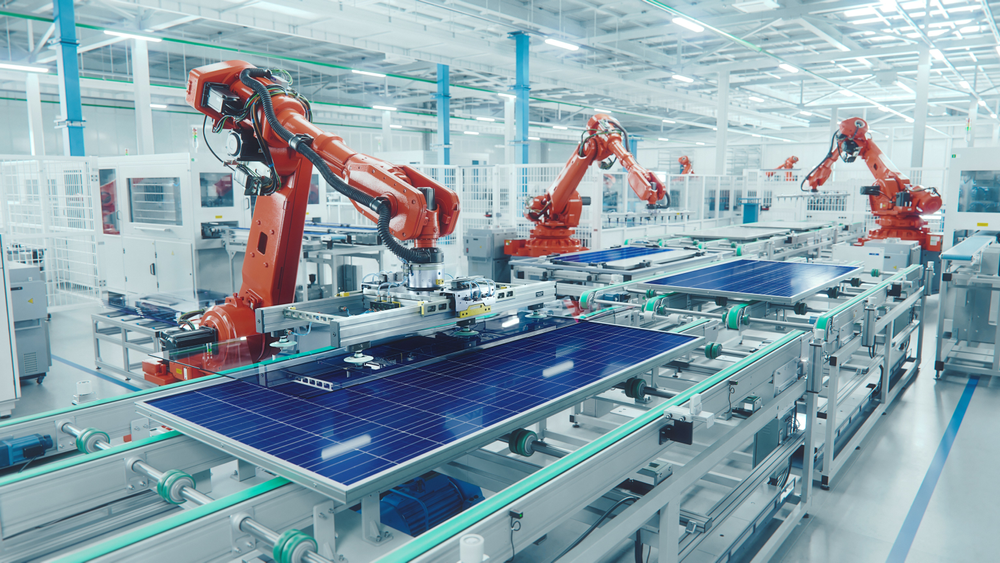
Operational Technology (OT) security safeguards the industrial systems, networks and physical processes that power modern society. Unlike Information Technology (IT), which prioritizes data confidentiality, OT security focuses on the availability, reliability and safety of physical operations, protecting the technology behind turbines, robotic arms, pumps and pipeline valves.
As Industry 4.0 drives the convergence of these traditionally isolated systems with enterprise networks, cyber resilience must account for equipment designed to run continuously for decades — far longer than the rapid refresh cycles of the IT world.
What is OT (operational technology) security?
Operational Technology (OT) refers to hardware and software that monitors or controls physical processes, from chemical reactions to mechanical production lines. OT security protects these systems from cyber threats that could disrupt operations, damage equipment, or endanger human safety.
The OT domain uses specialized terminology reflecting its hierarchical control structure:
- Industrial Control Systems (ICS): The command centers for processes ranging from automotive assembly to water treatment.
- SCADA (Supervisory Control and Data Acquisition): Systems that monitor and control geographically dispersed assets, such as regional power grids or pipeline networks.
- PLCs (Programmable Logic Controllers): Ruggedized, real-time computers that automate specific functions, like regulating pressure in a chemical reactor.
- HMIs (Human-Machine Interfaces): The screens and consoles operators use to visualize and interact with process data.
- MES (Manufacturing Execution Systems): Software that aligns plant floor operations with business goals and production schedules.
These systems prioritize determinism, the guarantee that a command will execute within a specific timeframe. In OT environments, latency is a physical hazard: a delayed signal can cause mechanical failure or endanger personnel.
The scale of industrial connectivity is expanding rapidly. According to IoT Analytics, the number of connected IoT devices reached approximately 21.1 billion by mid-2025, up from 18.5 billion in 2024, with projections approaching 39 billion by 2030 (IoT Analytics, 2025). This growth challenges the traditional “air gap”, the physical isolation of OT networks, and introduces new risks around remote maintenance, IIoT sensors, and supply chain integration.
OT security vs. IT security: a comparison of mission-critical priorities
The core difference: OT prioritizes physical safety and operational availability; IT traditionally prioritizes data confidentiality.
A compromised IT system may result in data loss or business disruption. A compromised OT system can lead to physical damage, environmental contamination, regulatory violations, or safety hazards affecting workers and the public.
This shifts the emphasis within the traditional CIA Triad (Confidentiality, Integrity, Availability). In OT environments, the priority is effectively reversed: Availability first, then Integrity, then Confidentiality, because uninterrupted system operation is critical to safety and production continuity.
OT systems often run 24/7 for years without interruption. Equipment lifespans routinely exceed 20–30 years, so critical infrastructure frequently relies on legacy operating systems selected for proven stability rather than modern security compatibility. Security controls must be non-intrusive and protocol-aware to avoid disrupting the precise timing of industrial automation.
The economics of operational resilience and the cost of downtime
Unplanned downtime is one of the most expensive operational challenges in industrial environments. According to the Siemens True Cost of Downtime 2024 report, the world’s 500 biggest companies lose approximately $1.4 trillion per year to unplanned downtime, roughly 11% of their annual revenues.
The cost of a single lost hour varies dramatically by sector:
These figures capture the “true cost”, including idle labor, scrap materials, emergency parts at premium prices, and the overtime required to recover production schedules. Beyond the direct financial hit, downtime inflicts long-term stress: potential equipment damage from emergency shutdowns and reputational harm from missed deliveries.
Threat actors target manufacturing specifically because they understand this pressure. The high cost of downtime creates strong incentives to pay ransoms and restore operations quickly.
Industry 4.0 and the new attack surface
Industry 4.0 drives the integration of OT systems with enterprise IT networks and the internet to enable real-time analytics and predictive maintenance. While this convergence enhances efficiency, it also bridges the air gap that historically isolated industrial assets. Risks can now migrate from the corporate network to the factory floor via contractor laptops, USB drives, or legitimate remote access gateways.
According to the IBM X-Force 2026 Threat Intelligence Index (reporting on 2025 activity), manufacturing has been the most targeted industry for five consecutive years, accounting for 27.7% of incidents across critical sectors. The Fortinet 2025 State of OT and Cybersecurity Report found that 50% of organizations still experienced one or more cybersecurity intrusions impacting OT systems, though organizations with higher security maturity reported significantly fewer incidents.
The challenge is compounded by “brownfield” environments, facilities where modern analytics software must integrate with legacy hardware that was never designed with cybersecurity in mind. Many of these systems use open communication protocols optimized for deterministic performance rather than complex authentication layers. As a result, threat actors often exploit valid credentials rather than software vulnerabilities, they “log in” rather than “break in.”
Lateral movement is a significant tactical threat. Devices within the industrial network often implicitly trust commands sent via native protocols, making network segmentation a mandatory defense to prevent a single compromised workstation from affecting an entire facility.
Structuring your defense: the Purdue Model
The Purdue Model (also called the Purdue Enterprise Reference Architecture) segments industrial control systems into distinct logical zones to align IT and OT security strategies. This hierarchical architecture enables defense-in-depth, ensuring a security incident in one zone does not propagate to cause a facility-wide failure.
The levels of the Purdue Model (0-5)
By strictly defining zones and conduits, organizations can apply allow-list protocol controls and restrict lateral movement between layers. This segmentation is the foundation of a Zero Trust architecture in OT, verifying every request regardless of its origin within the network.
Frameworks for action: NIST SP 800-82 and cyber resilience
NIST SP 800-82 (Guide to OT Security) provides a standard strategy for hardening industrial systems, emphasizing asset inventory, network segmentation, and compensating controls for systems that cannot be patched due to operational constraints. The focus extends beyond pure prevention to resilience, the capacity to withstand, respond to, and recover from attacks while maintaining operations.
A practical cyber resilience lifecycle follows three phases:
- Withstand (harden and prepare): Build accurate asset inventories and segment the network to limit the blast radius of any intrusion.
- Detect (identify and alert): Deploy protocol-aware monitoring to identify anomalies, such as a PLC attempting to communicate with an external IP address.
- Recover fast (respond and restore): Prioritize Mean Time to Recovery (MTTR) using disaster recovery runbooks and OT-validated backups.
OT security governance is also evolving. According to the Fortinet 2025 State of OT and Cybersecurity Report, 52% of organizations now place OT security under the CISO, up from 16% in 2022, signaling that industrial cyber risk is increasingly addressed at the board level.
Real-world industrial cyber incidents
Real-world incidents demonstrate the systemic risks of converged IT/OT environments and the need for specialized defenses.
Manufacturing: the risk of unauthorized calibration
Threat actors with access to an HMI can subtly alter the calibration of robotic arms or CNC machines. The result: production of faulty parts continues for days before detection, causing material waste and potential product recalls. Mitigation requires Role-Based Access Control (RBAC) and continuous monitoring for unauthorized configuration changes.
Energy and utilities: the Oldsmar water plant incident (2021)
In February 2021, authorities in Oldsmar, Florida reported that someone accessed the SCADA system of a water treatment plant and attempted to increase sodium hydroxide levels from 100 ppm to 11,100 ppm, a potentially dangerous change. An operator observed the changes in real time and immediately reversed them.
Important update: In 2023, the former Oldsmar city manager stated that the FBI found no evidence of external access and concluded the incident was likely caused by employee error. The FBI confirmed it could not verify a targeted cyber intrusion. Regardless of the root cause, the incident exposed real vulnerabilities in how many small utilities manage remote access and credential security. The lessons remain valid: critical infrastructure requires multifactor authentication, least-privilege access, and secure remote access controls.
Logistics: the Maersk NotPetya infection (2017)
The NotPetya malware spread through Maersk’s global network, paralyzing 76 port terminals and causing an estimated $250–$300 million in losses (per Maersk’s financial disclosures). Operations reverted to manual paper processing while approximately 45,000 PCs and 4,000 servers were rebuilt.
Lesson: Flat networks allow malware to spread globally within hours. Segmentation is essential to contain outbreaks and limit blast radius.
Critical infrastructure: Colonial Pipeline (2021)
A ransomware attack on Colonial Pipeline’s IT billing systems forced a proactive shutdown of the operational fuel pipeline to prevent potential lateral movement to OT systems.
Impact: Widespread fuel shortages across the U.S. East Coast and a $4.4 million ransom payment (of which approximately $2.3 million was later recovered by the DOJ).
Lesson: IT breaches can force OT shutdowns if the environments are not sufficiently segmented and resilient.
The critical role of recovery in industrial resilience
Rapid recovery is the final line of defense when an attack succeeds. Traditional IT backup tools often fail in OT environments because they do not support the specific hardware, proprietary configurations, or legacy operating systems that power industrial machines. Many OT workstations and HMIs still run Windows XP or Windows 7, systems that modern backup tools often no longer support.
Effective recovery strategies employ OT-validated solutions designed for these constraints. Acronis Cyber Protect, for example, supports operating systems from the XP era through current releases, enabling organizations to back up and restore critical HMI workstations regardless of their age.
Key capabilities of industrial-grade recovery include:
- Immutable backups: Read-only backup copies that ransomware cannot encrypt or delete.
- One-Click Recovery: Enables local operators to restore a failed workstation in minutes without specialized IT training.
- Universal Restore: Restores a system image to dissimilar hardware, critical when replacing obsolete equipment with available spares.
- Air-gap support: Functions fully in isolated environments with no internet connection.
These tools can integrate with standard automation architectures and support compliance with frameworks like NIS 2 and ISA/IEC 62443. By combining security with backup and recovery, industrial organizations shift from a reactive stance to managed resilience.
FAQ: OT / ICS cybersecurity questions answered
What does OT stand for in cybersecurity?
OT stands for operational technology, the hardware and software used to monitor or control physical processes in industrial environments.
What is ICS in cybersecurity?
ICS (industrial control systems) is a subset of OT. It refers to the specific systems, such as SCADA, PLCs, and RTUs, that directly manage industrial operations.
How does OT security differ from IT security?
OT prioritizes physical safety and operational availability; IT prioritizes data confidentiality. OT systems also have much longer lifecycles, stricter latency requirements, and different patching constraints.
What is the Purdue Model?
The Purdue Model is a logical framework that segments industrial control systems into zones (Levels 0–5) to improve security and prevent the lateral spread of cyber threats between OT and IT environments.
What are examples of OT security incidents?
Notable examples include the 2017 NotPetya attack on Maersk logistics ($250–$300M in losses), the 2021 Colonial Pipeline ransomware event (fuel shortages across the U.S. East Coast), and the disputed 2021 Oldsmar water plant incident.
What is the “true cost” of industrial downtime?
According to the Siemens 2024 report, the world’s 500 biggest companies lose approximately $1.4 trillion per year to unplanned downtime, about 11% of annual revenues. Hourly costs reach $2.3 million in automotive manufacturing.
What frameworks govern OT / ICS cybersecurity?
Three primary frameworks guide OT / ICS cybersecurity. NIST SP 800-82 Revision 3 (released September 2023) provides comprehensive guidance on securing industrial control systems, covering asset inventory, network segmentation, and compensating controls for unpatchable legacy devices. ISA/IEC 62443 is the international standard for industrial automation and control system security, defining security levels, zones, and conduits for system integrators and asset owners. The EU’s NIS2 Directive, which took effect in October 2024, expands mandatory cybersecurity requirements to cover a broader range of critical infrastructure operators, including manufacturing, energy, and water utilities, with stricter incident reporting and governance obligations.
Conclusion: next steps for industrial resilience
OT security is a foundational requirement for safe, reliable production. As Industry 4.0 increases connectivity, cybersecurity must evolve from prevention alone to holistic cyber resilience, layered defense based on the Purdue Model, accurate asset inventory, and rigorous network segmentation.
To protect critical operations, organizations should:
- Harden environments: Apply NIST frameworks to implement compensating controls for legacy systems and restrict remote access with MFA and least-privilege policies.
- Monitor for anomalies: Deploy protocol-aware tools to detect unauthorized commands within the OT network.
- Ensure rapid recovery: Implement OT-validated recovery solutions, such as Acronis Cyber Protect, to reduce mean time to recovery (MTTR) from days to minutes.
By framing cybersecurity as an enabler of continuous operation, IT and OT teams can collaboratively protect the infrastructure that sustains the global economy.
Written by

About Acronis
Acronis is a leader in AI-native cyber protection, unifying data protection, cybersecurity, IT operations and hybrid infrastructure to deliver business continuity, security and compliance with less cost and complexity. More than 21,000 service providers trust Acronis to protect over 750,000 businesses in 150 countries. Acronis is headquartered in Schaffhausen, Switzerland.